10 Pledges For Croydon

The Resistance Kitchen has developed “10 Pledges for Croydon” that we believe will positively support our community. We are asking all candidates standing in the upcoming Croydon local elections to commit to these pledges.

We will publish all responses as they are received, enabling our community to make an informed decision on 7th May.

If you are a candidate who has not yet received our pledge form, please download it here. Once completed, kindly return it to info@resistancekitchen.uk.
Thank you.

10 Pledges for Croydon – Candidates form

Ten Pledges for Croydon

The Resistance Kitchen is a community kitchen and food bank serving those in need in Croydon. Over the past three years, the number of people turning to us for support has tripled – a stark and unacceptable reflection of the growing hardship in our borough. Every day, we see the reality of deprivation up close: families struggling to put food on the table, individuals pushed to the brink, and a community being failed by decisions made at both national and local levels.

This is our call to action for Croydon – ten essential pledges we urge every candidate standing for mayor and council to commit to. Our community deserves leadership that will stand up, take responsibility, and deliver real change.

We will publish all responses as they are received, so residents can make a truly informed choice when they vote on May 7th.

Resistance Kitchen.

Pledge 1 : No New Gambling Venues

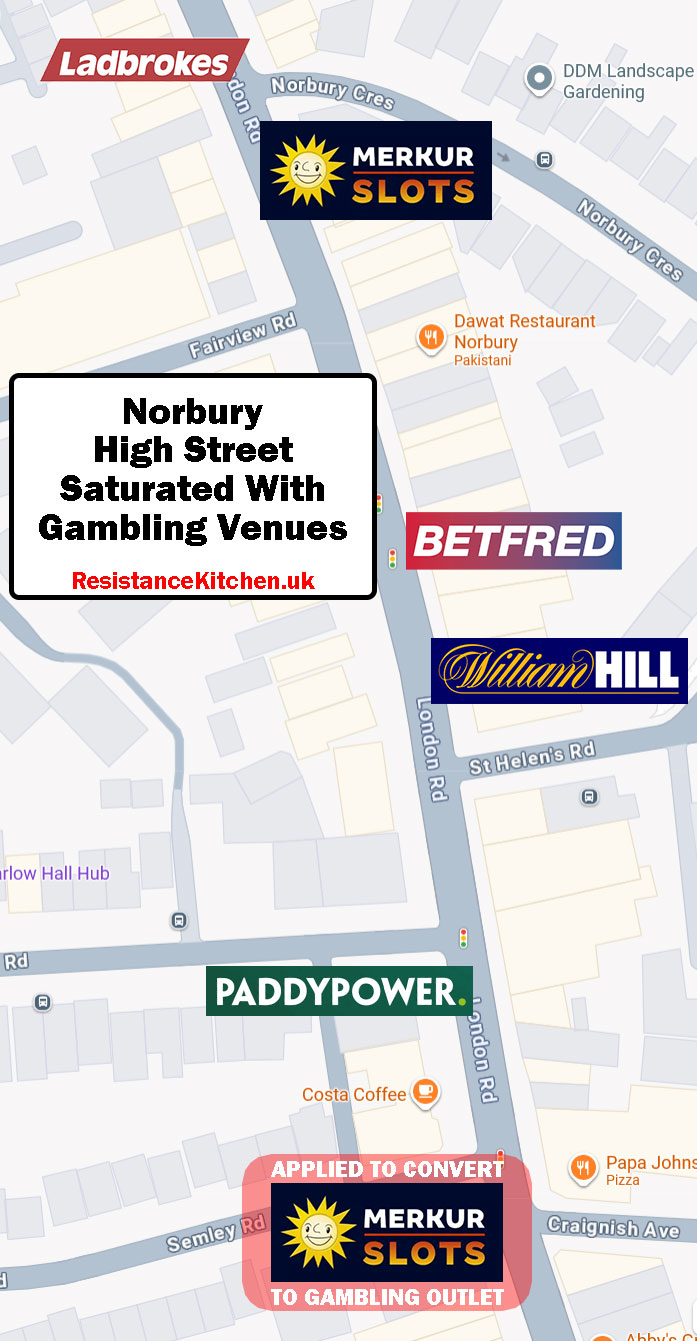
I will oppose any new gambling venue, including the proposed licence on Norbury High Street, and support a borough-wide moratorium on all new and renewed gambling licences in Croydon.

Background

Gambling venues are driving a crisis of poverty, homelessness, debt, and mental health breakdown across our communities. This is not just an economic issue – it is a growing public health emergency, draining an estimated £1.77 billion from the NHS every year.

Merkur, a €4 billion German gambling giant already operating four venues in Croydon, is now applying for a licence to convert the old NatWest building on Norbury High Street into yet another gambling site. If approved, it would create an appalling cluster of six gambling venues within just 200 metres – including the former Barclays building, for which Merkur has already been granted a licence. The company’s record speaks for itself: in 2025, Merkur was fined £95,450 for exploiting a 64‑year‑old cancer patient who lost £2,000 in just 16 hours of play. She tragically died before the verdict was issued.

This cannot continue. Croydon needs an immediate, blanket moratorium on all new gambling licences – and a suspension of renewals. Our borough has one of the highest densities of gambling venues anywhere in the UK, with 55 registered sites preying on the most vulnerable members of our community. This is systematic exploitation, targeting deprivation and desperation for profit.

Thirty‑eight local authorities across the country – including 17 London boroughs – have already demanded stronger powers to refuse gambling applications. Croydon must stand with them and say enough is enough. Our community deserves to be protected, not sold out to corporate greed.

More Information:

Pledge 2 : Divest from the Arms Trade

I will advocate for the council to divest its pension fund investments from all arms companies.

Background

According to Save the Children, “at least one child in Gaza has been killed every hour,” amounting to over 20,000 children killed by last September. This is not an abstract crisis – it is genocide.

Six months into what has been described as a ceasefire, the reality remains unchanged. As Oxfam states: “Six months later, Palestinians are still experiencing more of the same: going to bed hungry in flooded tents, facing long lines for clean water, and succumbing to diseases and injuries without a healthcare system or basic medical supplies. All the while the government of Israel drops bombs and cuts off vital, life- saving assistance with U.S. support.”

Croydon Council is not a bystander. It is investing public money through its pension fund into this violence.

The Croydon Local Government Pension Scheme holds approximately £22 million in 27 arms companies directly linked to military operations, including:

  • Elbit Systems (£93,886) – Israel’s largest private arms company which describes itself as the “backbone” of the occupation forces in Gaza. It produces 85% of its drone fleet used in Gaza.
  • Lockheed Martin (£1,206,590) – Manufacturer of the F-35, described by the company itself as the “most lethal fighter jet in the world,” used in airstrikes that have dropped an estimated 85,000 tonnes of bombs on Gaza -“exceeding the amount of explosives used in World War II” (UNHRC, June 2025).
  • BAE Systems (£504,647) – Supplies 15% of the F-35 aircraft used in bombing campaigns.
  • Airbus (£948,319) – Its Typhoon jets have been implicated in airstrikes on civilians in Yemen.
  • Boeing (£1,381,522) – Produces Apache helicopters used in Gaza.
  • Raytheon (£1,780,425) – Manufactures bombs documented by Human Rights Watch as used in attacks on civilian infrastructure.

These are not neutral investments – they are direct financial links to companies whose products are used in war crimes.

International legal institutions have raised serious concerns. The International Criminal Court has been asked to investigate senior executives from BAE Systems, Airbus, and Raytheon for “aiding and abetting” war crimes in Yemen.

Meanwhile, the International Court of Justice has ruled that there is “plausible evidence” that Israel is committing genocidal acts in Gaza. As a signatory to the Genocide Convention, the UK has a binding legal obligation to prevent such acts – not contribute to the conditions that enable them.

That obligation extends to local government.

Croydon’s pension fund also includes investments in companies involved in banned cluster munitions, including Elbit Systems and Lockheed Martin. These weapons are prohibited because of their indiscriminate impact: 93% of casualties are civilians, with children making up nearly half due to unexploded bomblets.

The Convention on Cluster Munitions prohibits not only their use and production but also “assistance, encouragement or inducement” of these activities. The UK recognises that investment constitutes such assistance (Cluster Munitions Monitor 2024).

Other pension funds, such as Merseyside’s, have already divested from cluster munitions in line with these legal obligations.

But the issue extends beyond arms.

Croydon Council has over £120 million invested in companies linked to occupation, apartheid, and human rights abuses in Palestine. This includes Israeli banks and major technology firms such as Microsoft, Alphabet, and Amazon – identified by the United Nations as supporting illegal occupation and settlement infrastructure.

Across the UK, over 30 councils have passed motions supporting divestment, and more than 1,000 councillors have pledged their support.

Croydon has not.

Local residents, including pension scheme holders, have made their position clear. Over 1,200 letters have been sent to councillors and the pension committee. Petitions have been submitted. Residents have attended meetings, raised formal questions, and demanded action.

Yet the council has delayed, deflected, and restricted debate.

This cannot continue.

Divestment is not symbolic – it is a concrete step to ensure that public funds are not complicit in violations of international law. It is a legal duty and a moral imperative.

To reflect differing levels of commitment, we propose two pledges:

  • Divestment from all arms companies (£22 million).
  • Full divestment from all companies linked to occupation and human rights violations in Palestine (£120 million+).

Both pledges deserve support.

More Information:

Pledge 3 : Divest from Companies Complicit in the Occupation of Palestine

I will support divesting the council’s pension fund from companies involved in the occupation and human rights violations in Palestine.

Background

See Pledge 2 above.

Pledge 4 : Invest in Social Housing

I will push for a significant portion of the council’s pension fund to be invested in social housing within Croydon.

Background

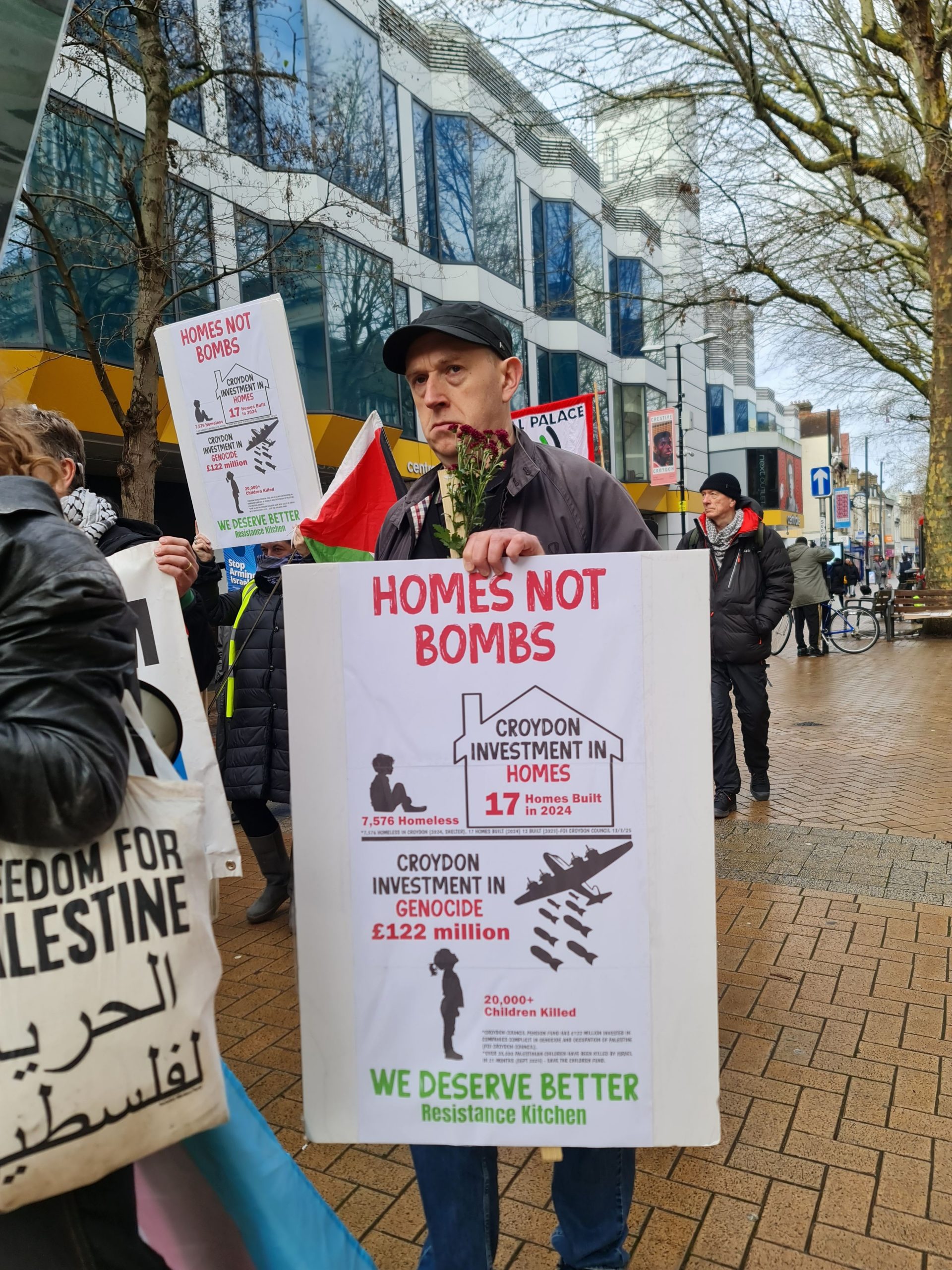
The case for investing in social housing in Croydon is overwhelming. Shelter has reported that 8,722 people in Croydon are homeless, including 3,933 children, according to Q1 2025 figures.

At Resistance Kitchen, we see the reality of homelessness every day. Of our guests, 43.3% are homeless, of which 15.4% are rough sleepers. Behind these statistics are the broken lives of ordinary people. One woman who came to us for help had been living with an abusive boyfriend, who attacked her with sharp glass and left a deep cut along the edge of her right hand as she tried to protect her face. Although the police prosecuted him, the flat was in his name, and she was forced out. With no emergency shelter available, she ended up sleeping in a tent in Norbury Park for more than a month, terrified of being attacked as a woman alone. Nearly 36% of female rough sleepers have experienced an attack in the past year.

Croydon Council figures published in July 2025 show that for every person housed in temporary accommodation, three are turned away because of budget pressure. The council has also overspent its housing budget by 73%. This reflects the high cost of temporary accommodation and the shortage of affordable homes. Around 50 new households each month are placed in temporary accommodation. Across London, boroughs are collectively spending about £90 million a month – around £3 million every day – on temporary accommodation because there are not enough homes.

Unless action is taken, the homelessness crisis will only worsen. The prevention duty is a measure of how many households are at immediate risk of becoming homeless. Croydon has the highest prevention duty rate of any London borough, with 3.58 households per 1,000 at risk, according to Trust for London’s Q3 2025 data.

Freedom of Information requests show that Croydon Council built only 17 affordable homes in 2024, and just 12 the year before. At the same time, the council says it has no money to invest in housing while sitting on a pension fund worth nearly £2 billion.

More than £122 million of that fund is currently invested in companies implicated in genocide and the illegal occupation of Palestine.

Last year, Resistance Kitchen published a detailed report, Homes Not Bombs – The Case for Divestment, arguing that Croydon Council should shift pension investments away from arms manufacturers and into social housing. The report argues that social housing would meet urgent local need while also supporting strong pension returns and meeting the council’s fiduciary duty. It offers:

  • Stable, long-term rental income, supported by housing benefit, reducing arrears and vacancies.
  • Inflation-linked leases that help protect asset value and align with rising costs.
  • Potential capital appreciation as property values increase, strengthening the fund over time.

This approach would provide predictable returns to meet future pension liabilities while also delivering genuinely affordable homes. It would align financial responsibility with social need.

The Mayor of London has also recently encouraged London borough pension funds to invest more in social housing.

More Information:

Pledge 5 : Introduce Rent Controls

I will urge the council to lobby for powers to regulate private rents and support the creation of a Croydon Rent Commission.

Background

In London, exorbitant rents are not just a cost-of-living problem – they are a direct driver of homelessness. A catastrophic shortage of social housing has forced huge numbers of people into the private rented sector, where rents have soared to record highs. Londoners are now spending between 40% and 57% of their income on rent, while Shelter says low-income private renters are paying an outrageous 63% of what they earn just to keep a roof over their heads.

When rent swallow most of a household’s budget, people are living on a knife edge. One wage cut, one higher bill, one rent rise – and they can fall from barely surviving into arrears, then eviction, then homelessness.

Rent increases at the end of a private tenancy are the single biggest cause of homelessness, accounting for around 25% of all cases seeking homelessness support. Every 7.5 minutes, someone in London is forced into homelessness.

At Resistance Kitchen, the crisis is clearly visible. Our guests fall into two groups: 48% are homeless, and 46% are in rented accommodation. Nearly half of those renters have private landlords with no rent control. They are not simply struggling – they are on the brink. They cannot afford both rent and food, so they turn to us for basic food provision, just to survive.

At our kitchen, we witnessed an elderly Asian woman in her 70s collapse from hunger. She was waiting patiently in the food queue when she fainted; thankfully, two kind women behind her caught her before she struck the pavement. As she came round, she told us that she hadn’t eaten for two days, that the last thing she remembered eating was a tin of peach slices she had received from our kitchen a week earlier, she had simply run out of money for food.

This is not sustainable. Croydon already has nearly 9,000 people experiencing homelessness. The Renters’ Rights Act is welcome, but it does not go nearly far enough. We need rent control now: a cap on rents to stop people being driven out of their homes and into homelessness.

At present, local councils do not have the power to control rents directly. But councils including Oxford, Worcester, and Bristol have already called on the government to give them the powers to impose controls on private rents, and the London Mayor has made the same case. Bristol has established a Living Rent Commission to tackle affordability in the private rented sector. Croydon must follow their example – because without action, this crisis will only deepen.

Pledge 6 : End Live Facial Recognition Surveillance

I will support ending the use of live facial recognition surveillance by police in Croydon.

Background

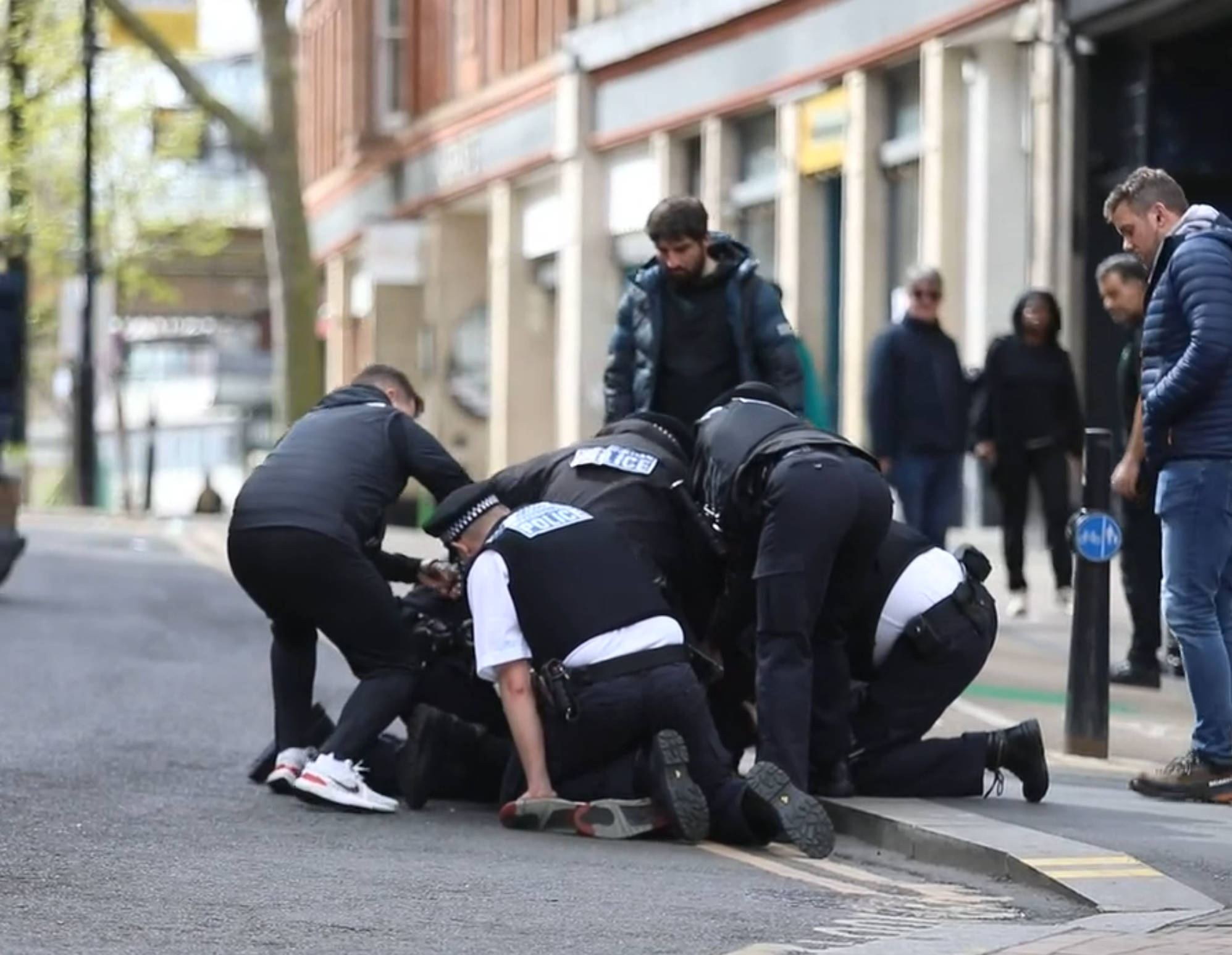
Police Live Facial Recognition (LFR) operates as a biometric checkpoint. Vans equipped with facial recognition cameras scan the faces of anyone passing within roughly 50 metres, capturing biometric data without consent. In effect, people are treated as suspects, placed into a digital lineup against a secret police watchlist. If flagged, individuals are stopped and often detained, sometimes in handcuffs.

Although police signage claims there is “no legal requirement” to pass through LFR, practice suggests otherwise. Plainclothes officers have been stationed nearby to intercept those who avoid the cameras. People who cover their faces have been stopped and compelled to submit to scans, with at least one individual fined £90 for objecting (Romford, May 2019). Choosing not to be scanned can itself trigger suspicion.

Inaccuracy

Independent analysis of police data from 2016–2023 indicates the system is wrong in around 85% of cases where it flags someone -misidentifying innocent people as suspects.

Police claim a far lower false alert rate of 1 in 6,000, but this figure relies on a misleading method. Instead of measuring how many stops are incorrect, they divide incorrect stops by the total number of passers-by. For example, if 10 people are stopped and all 10 are innocent, the true error rate is 100%. Yet if 25,000 people walked past, the police report it as 0.4%, masking a failed deployment.

Despite this, inspectors leading LFR operations have described the system as “flawless.” In practice, those flagged must often prove their innocence. The burden of proof against a “flawless system” can be incredibly high. Even valid ID may not be accepted, with some individuals required to provide fingerprints or other biometric data (Oxford Circus, Jan 2022).

Recent cases highlight the risks:

  • A Black man travelling from Croydon was detained for 30 minutes despite presenting multiple IDs; he is now pursuing legal action (Jan 2026).
  • South Wales Police paid damages to a Black man wrongly arrested and held for 13 hours after being identified by facial recognition (Jan 2026).
  • In Feb 2026, an Asian man was arrested for a burglary 100 miles away despite clear physical differences from the suspect. The CCTV image showed someone much younger, lighter-skinned, clean-shaven, with different facial features. Despite this, officers relied on the LFR match over their own judgement – raising serious questions about claims that the technology is meaningfully subject to human oversight.
Racial Bias

Freedom of Information data shows stark racial bias in the technology: in London in 2025, 80% of misidentifications involved Black individuals.

Last month Essex police suspended the use of LFR technology after a study by Cambridge University, that they commissioned, found the technology disproportionately targets Black people.

Ineffectiveness

Claims that LFR reduces crime are not supported by evidence. A University of Cambridge study (March 2026) found no statistically significant reduction in crime before, during, or after deployments.

Systemic Concerns

Opposition to LFR is not only about errors or bias, but about its role as a tool of control – one that disproportionately impacts marginalised communities. In the context of documented institutional racism in policing (Casey Review, 2023), such technologies will inevitably produce racist outcomes. For example, tasers work accurately on all races, but they are used disproportionately on people of colour (8x more in 2019/20).

Monitoring by the Resistance Kitchen in Croydon (Sept 2024) found clear evidence of systemic racial disparities:

  • 83% of stops were wrongful.
  • 100% of Black individuals stopped were innocent, compared to 67% of white individuals.
  • All Black individuals stopped by white officers were immediately handcuffed before any checks were carried out, despite full cooperation, while no white individuals were handcuffed prior to checks.
  • Black individuals were also detained for significantly longer – over twice as long.
Expansion of Surveillance

Police databases used for facial recognition have expanded beyond the Police National Database (20 million images). FOI disclosures reveal access to passport and immigration databases (around 150 million images), without public or parliamentary approval. Usage of passport data increased more than 200-fold between 2020 and 2023.

Under new legislation (Crime and Policing Bill), DVLA driving licence images – covering around 50 million people – may also be included.

Predictive Policing

LFR has been used at peaceful protests, with watchlists including individuals not suspected of crimes but considered undesirable attendees. In some cases, people are added based on predictions they may commit offences in the future.

Guidance from the College of Policing explicitly allows this. It states that watchlists can include individuals who police “suspect… are about to commit an offence,” as well as their “close associates,” even where those associates are not suspected of any wrongdoing in the past, the present or the future.

This raises serious concerns about freedom of expression and assembly, and risks embedding historic biases into future policing.

Local Impact: Croydon

In 2025, police LFR scanned 8.6 million faces, with nearly half in London. Deployments are concentrated in areas with higher Black populations (London Assembly study, 2025). Croydon has the largest Black population in London, and within Croydon, Thornton Heath – where over 40% of residents are Black – has been heavily targeted.

It is therefore no coincidence that Croydon town centre and Thornton Heath are among the most surveilled areas, while predominantly white areas such as South Croydon have seen no LFR deployment.

With 15 permanent LFR cameras installed (Oct 2025), Croydon is now the most surveilled borough in the UK for facial recognition – exceeding the total number of deployments in Westminster and Newham combined, the next two highest boroughs.

Police claim they have community backing for LFR, but this support is largely manufactured – relying on organisations funded by MOPAC that depend on Met approval to survive, effectively rubber-stamping endorsement. This is coupled with messaging that fuels fear about violent crime operating unchecked without LFR cameras. No community risk assessment was conducted prior to installing permanent LFR cameras in Croydon.

Call to Action

This level of surveillance is unacceptable. Over 20 community organisations in Croydon have called for an end to LFR and submitted evidence to the London Policing Ethics Panel as part of its review of the Metropolitan Police’s use of the technology -yet these concerns have been ignored.

Other councils, including Islington, Newham, and Hackney, have passed motions opposing LFR, citing an independent legal review (Matrix Chambers, June 2022) which found the current legal framework “unfit for purpose.”

Croydon must join them.

As Newham councillor Areeq Chowdhury warned: dystopian futures are not imposed overnight – they are built gradually, through small, seemingly minor changes, until fundamental rights we once took for granted become impossible to exercise.

More Information:

Pledge 7 : Expand Free Drinking Water Access

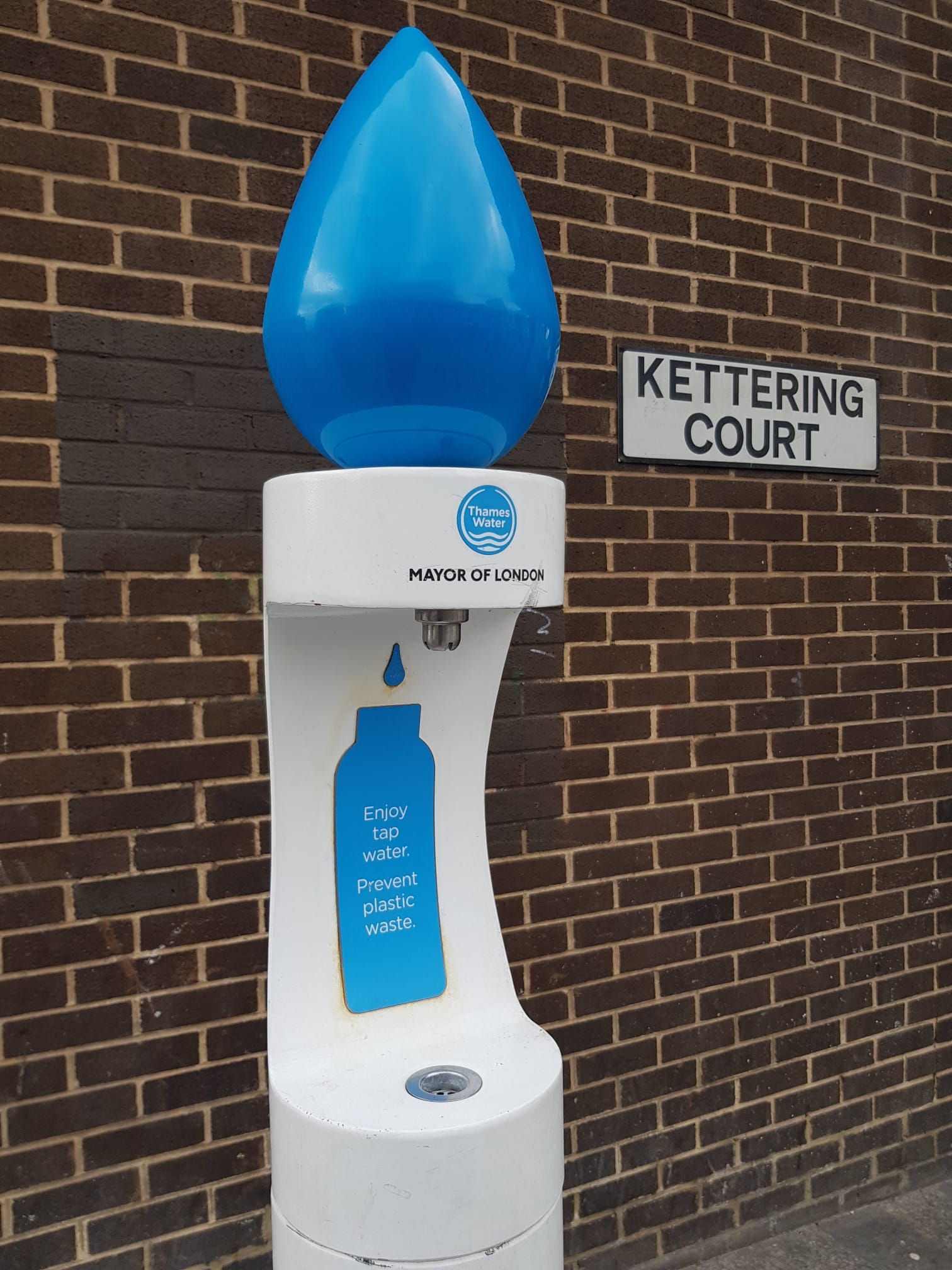
I will push the council to install more free public drinking fountains across Croydon, aiming for at least 125 to match the London borough average.

Background

At our food drives, we regularly hand out bottled water – yet we hadn’t grasped how life‑saving access to free drinking water truly is until a man who had recently become homeless shared his experience. Sleeping rough in Croydon, he told us that one of the hardest struggles wasn’t food or shelter, but water. He went two full days without a drink before finally finding a single working fountain. His words exposed a shocking gap: London offers roughly 4,000 free drinking fountains across 32 boroughs, but Croydon – the city’s most populous borough with over 400,000 residents – has only six. That’s six fountains for a borough where nearly 9,000 people are homeless. 14% of the homeless that we serve are rough sleepers.

No one in one of Britain’s largest urban centres should face dehydration simply because they cannot afford a bottle of water. Croydon’s neglect of such a basic human need is not just a failure of infrastructure – it’s a failure of compassion.

Pledge 8 : Increase Public Toilets

I will campaign for the installation of more free public toilets, with a minimum target of 40 facilities across Croydon.

Background

Croydon’s public toilet provision has been hollowed out. Under the guise of creating Equality Act-compliant facilities, most toilets were closed and never reopened – including even single-person pay-to-use toilets like the one at Norbury Park beside our kitchen, which already met the required standards.

The council now admits there are only two public conveniences left in the whole borough. UK guidance used by several councils suggests a minimum of one toilet block is required for every 10,000 people, which means Croydon would need at least 40 public toilet facilities.

The council is instead relying on a Community Toilet Scheme, where local businesses let members of the public use their toilets. But that scheme never materialised in any meaningful way.

That is no substitute for proper public toilets. Homeless people cannot be expected to rely on the goodwill of businesses that are there to serve customers, and the lack of toilets is pushing people into parks like Norbury Park, with serious consequences for public health and for those trying to keep the area clean.

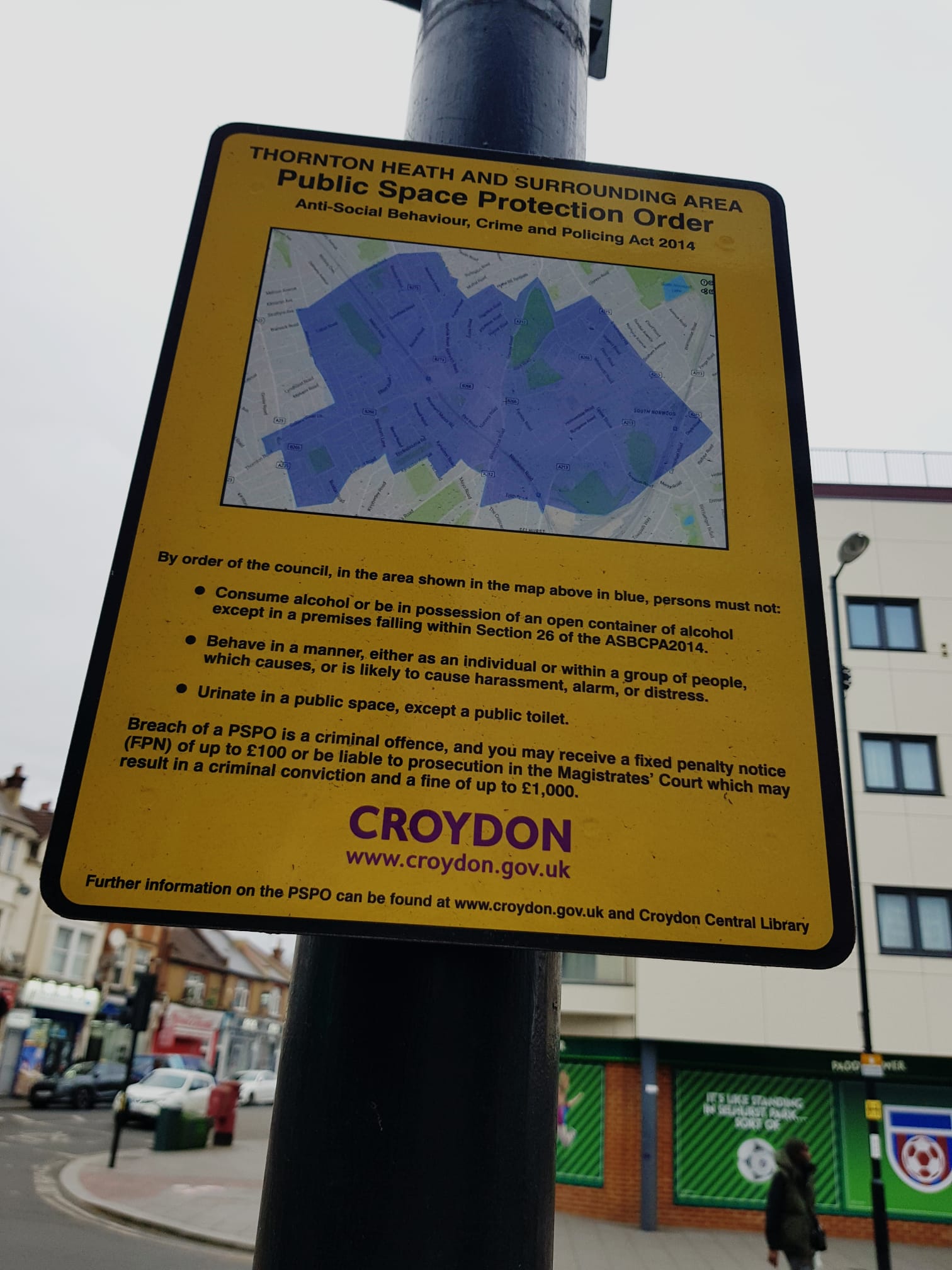
Rather than solve the problem, the council has introduced Public Spaces Protection Orders (PSPO) that criminalises urinating in public.


More Information:

Pledge 9 : Abolish PSPOs

I will support the immediate repeal of all Public Space Protection Orders in Croydon.

Background

The Anti-Social Behaviour, Crime and Policing Act gives local councils the power to issue Public Space Protection Orders (PSPOs), which effectively turn everyday lawful behaviour into criminal offences within designated areas. These orders undermine fundamental rights – including freedom of movement, protest, association, and human dignity – by placing excessive restrictions on public life.

PSPOs are frequently used against vulnerable groups, especially people experiencing homelessness, punishing them for poverty and visibility rather than any genuine harm. Councils have used these powers to criminalise activities such as street drinking, sleeping in doorways, storing belongings in public, begging, urinating, or busking – even for using amplified sound.

Evidence shows these laws are enforced selectively. For instance, a PSPO banning public drinking saw homeless men moved on by authorities, while a nearby group of students drinking wine was ignored.

Human rights organisation Liberty has warned that PSPOs “criminalise homelessness” and has called for them to be abolished. Each order carries an on-the-spot fine of up to £100, and failure to pay can lead to prosecution – funnelling those in poverty straight into the criminal justice system.

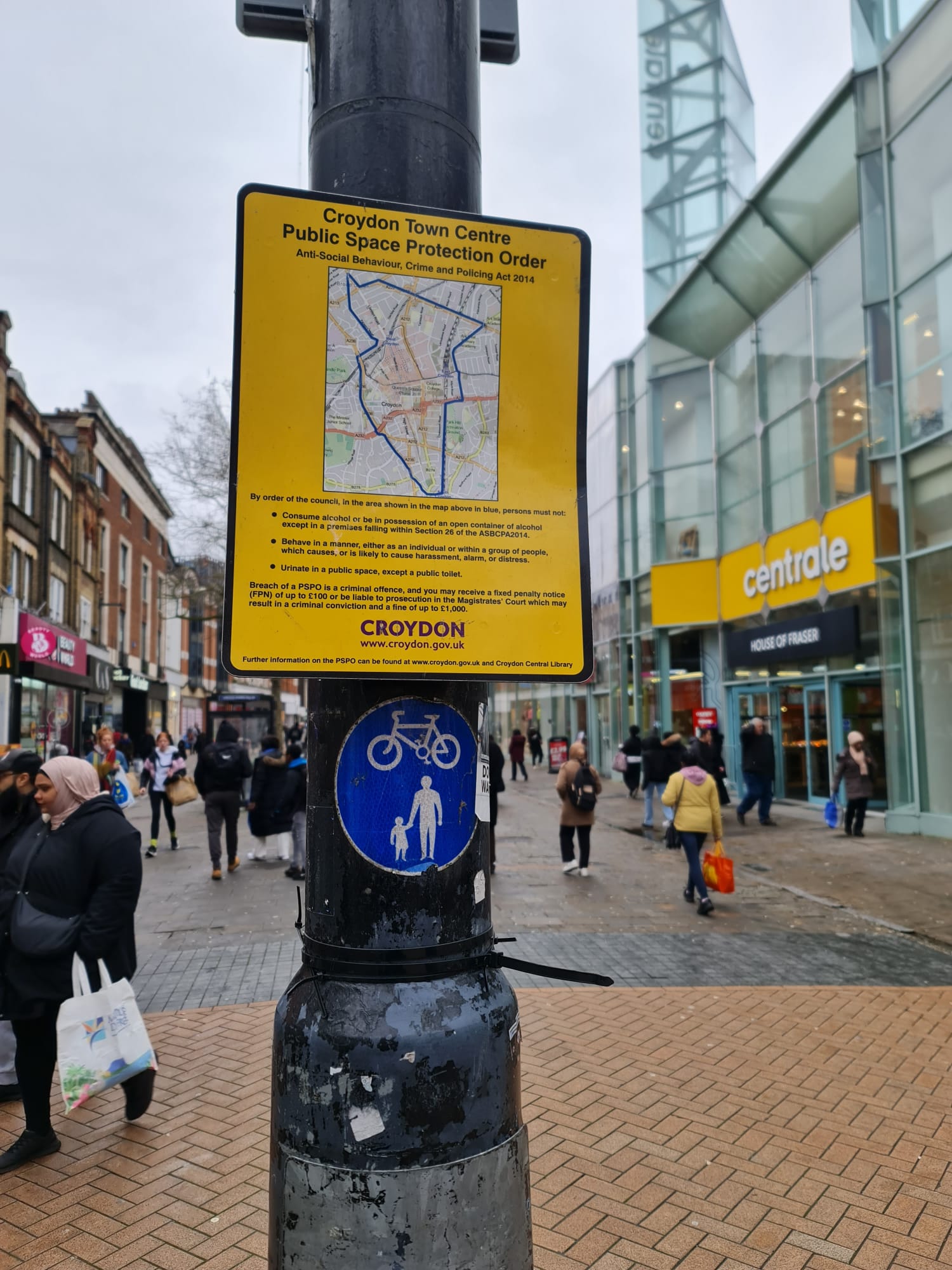
In Croydon, two PSPOs currently apply: one across the town centre (recently expanded) and another in Thornton Heath. Both make it illegal to drink alcohol or urinate in public. Yet the council has closed all but two public toilets in London’s most populous borough of nearly 400,000 residents, leaving many – particularly homeless people – with no alternative. Instead of addressing the root causes of these issues, like the lack of public toilets or rising homelessness, the council has chosen to criminalise behaviour driven by those very failures.

The Croydon town centre PSPO has also been amended, at the request of the police and Croydon BID (a private security body funded by major businesses), to ban the use of amplified sound – a clause absent from its original terms. This directly infringes on the rights to protest and free expression. At a recent peaceful Palestine protest, police threatened to arrest the speaker for using a megaphone, effectively silencing legitimate demonstration. Protest depends on being both seen and heard; this PSPO strips citizens of that right.

PSPOs only last a maximum of three years before renewal, but councils can revoke them at any time.

We call for the immediate cancellation of all PSPOs in Croydon. The council must stop criminalising poverty and protest and instead invest in real community-based solutions – supporting people through outreach, housing, and access to essential public facilities.

Pledge 10 : Strengthen Police Accountability

I will work to ensure the police are accountable to the community and challenge practices, such as stop and search, that disproportionately affect marginalised groups.

Background

In July 2023, a Black mother in Croydon was attacked by police as she stepped off a bus on Whitehorse Road with her young son. Officers wrongly suspected her of not paying a £1.75 fare. Bodycam evidence later proved there was no lawful reason for the use of force. PC L was convicted of “assault by beating” after the judge ruled his testimony “lacked all credibility.” Yet Croydon Police refused to dismiss him, keeping a convicted violent officer on full pay. At a public meeting, Croydon’s Chief Superintendent even defended this decision, claiming punishment could “discourage new recruits.”

This is unacceptable. The police are sworn to uphold the law, not ignore it when one of their own is guilty.(Even though the conviction was controversially overturned more than two years later, the issue of accountability remains unchanged.)

This is not an isolated case. The same year Metropolitan Police officer Wayne Couzens confessed to the rape and murder of Sarah Everard, an investigation revealed that over half (52%) of Met officers found guilty of sexual misconduct between 2016–2020 kept their jobs. Many had targeted vulnerable victims, witnesses, and colleagues.

This is a systemic failure.

The Casey Review found that, even 25 years after the Macpherson Report, the Met remains institutionally racist and unfit to police itself.

Of the half a million stop and searches carried out annually, a third occur in London. Croydon – dubbed South London’s stop‑and‑search capital – ranks among the highest in the country, with hotspots in Croydon town centre, where searches are heavily concentrated, at levels comparable only to Leicester Square in Westminster. Our community bears the brunt.

People of colour are disproportionately targeted, and the most extreme and invasive form of stop and search – the strip search, which involves the exposure of intimate body parts – illustrates this inequality most starkly. In Croydon, Black residents, including children, are 4.4 times more likely to be subjected to this degrading procedure than white residents, despite making up only 22.6% of the population. A review by the College of Policing found little relationship between the number of searches and actual crime levels, yet police continue to justify this tactic as essential to crime prevention.

The police must be held accountable – the current system is failing.

Although local councillors have limited formal authority over the Metropolitan Police (oversight rests with the Mayor’s Office for Policing and Crime and the London Assembly), they can still influence change through community engagement. That leadership is currently missing.

At the London Police Race Action Plan meeting in Croydon, when residents raised the case of PC L, councillors present stayed silent as Chief Inspector James Weston dismissed the question without response. A previous community letter to Chief Superintendent Andy Brittain also went unanswered.

Across London, communities in Haringey, Brent and other boroughs have challenged police policies like stop and search by organising complaints, pressing for investigations, and demanding public scrutiny. Croydon councillors should do the same. Our elected representatives must stand up, speak out, and demand accountability from those sworn to protect and serve our community.

More Information:
Help raise awareness by sharing